
Bar Inventory Management System
About the project
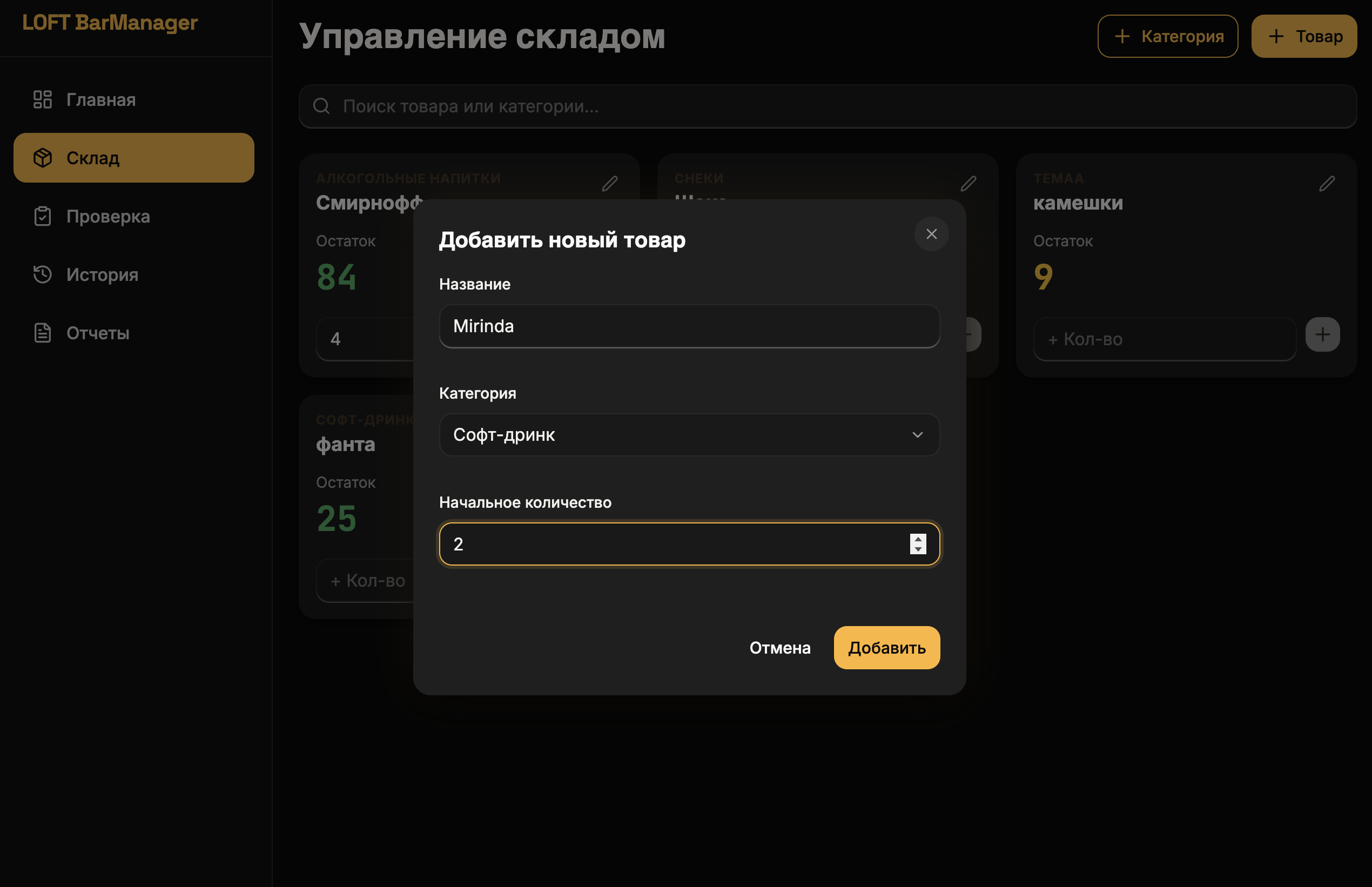
The idea for this app originated from a close friend who works as a bartender on a restaurant ship. He frequently voiced his frustrations about inventory discrepancies—daily and weekly reports never matched the actual stock levels in the bar and warehouse. Sales numbers, leftover items, and real inventory were continually out of sync. The problem stemmed from the involvement of multiple people: one person recorded sales, another took items from the warehouse, while others managed restocking—often forgetting or incorrectly recording their actions. Recognizing the opportunity for a solution, I envisioned a simple, accessible web application that could operate on any internet-connected device. The goal was to track inventory, sales, and movements in real time for small bar setups. My app offers complete control over everything during a bartender's shift. Every action, from sales to stock adjustments and corrections, is logged and stored in a dedicated history section. Data for the bar and warehouse is fully synchronized. For instance, if a product is available in the warehouse and needs to be ordered, the bartender can easily select and add (e.g., Coca-Cola + 20 cases) from a dropdown menu, instantly updating the information for both the bar and warehouse. All changes are timestamped, allowing users to see stock levels before and after each action. New products can be added seamlessly, facilitating a growing assortment. Key indicators and information are presented through two dashboard widgets, and the reporting section generates comprehensive reports by product type, name, date range, and more. In essence, the app centralizes sales, inventory, reporting, and management into one clean interface, keeping all staff and managers informed of the bar's real-time status. After developing a working version, I shared it with my friend for testing in real conditions. He was genuinely impressed and provided valuable feedback based on his workflow. This was where Floot truly impressed me: the ability to implement small feature changes smoothly without disrupting existing code, allowing for natural integration. Both he and his team were thrilled with the outcome, and post-launch, we decided to continue enhancing the app further. Additionally, I saw a great opportunity to participate in Floot’s publication program to earn bonus credits, especially since internal tools were prioritized. A major highlight occurred during the design phase. Rather than overthinking the visuals, I showcased the logo of my web development studio to the Floot agent. In response, Floot generated an exceptional design—clean, stylish, and perfectly aligned with a bar inventory and control system. It respected my logo's colors and style while beautifully adapting them to a professional product interface. The result genuinely exceeded my expectations.