How a Non-Technical Founder Quit His Job to Build Apps Full-Time Using AI

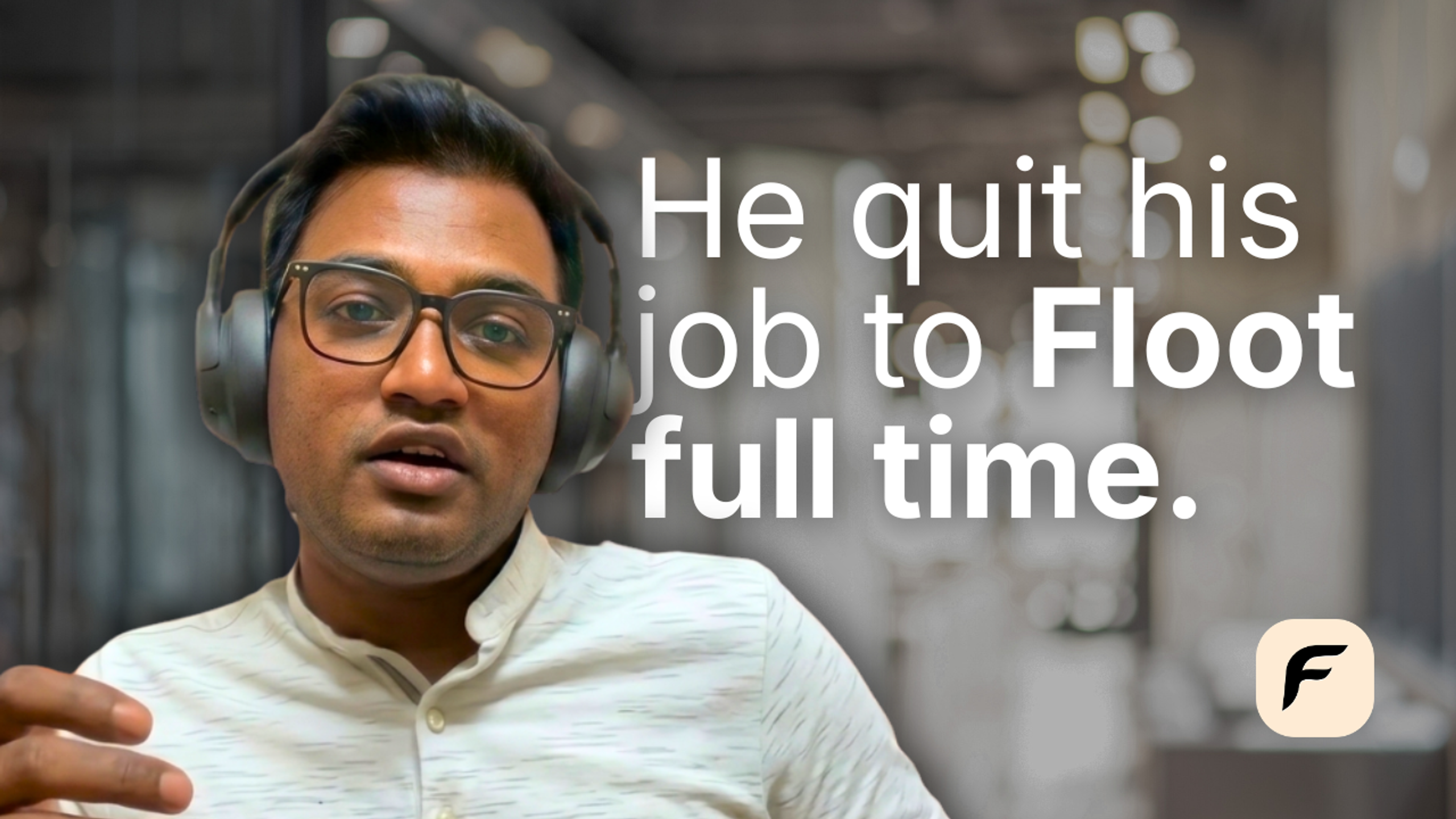
How a Non-Technical Founder Quit His Job to Build Apps Full-Time Using AI
For most of the history of software, building an app required one thing many founders didn’t have:
the ability to code.
If you had the idea but not the technical skills, your options were limited. You had to hire developers, work with agencies, or wait for technical partners to build your product.
That process was slow, expensive, and often frustrating.
Today, tools powered by AI are changing that.
Platforms like Floot are making it possible for non-technical founders to build real production apps without writing code.
For Hamraj, that shift changed everything.
After years of relying on developers, he discovered Floot, started building products himself, and eventually made a bold decision:
he quit his job to build platforms full-time.
Here’s how it happened.
The Problem Non-Technical Founders Face
Hamraj had been building startup ideas since around 2014.
But there was always one obstacle: he wasn’t a developer.
Like many founders, he relied on agencies and technical partners to turn his ideas into real products. While this worked sometimes, it created constant friction.
Communicating product ideas to developers rarely translated perfectly into what was actually built.
“You explain your idea to a developer and they build something similar, but not exactly what you imagined.”
Even small product changes required new development work.
That meant more time, more money, and more waiting.
Over time, this slowed down experimentation and made it harder to quickly test new ideas.
Discovering Floot
Hamraj first heard about Floot through LinkedIn.
The platform had recently been mentioned in connection with Y Combinator, which immediately caught his attention.
Curious about whether AI could finally solve the problems he had faced for years, he decided to try the platform.
What started as an experiment quickly became something much bigger.
The Limitations of Other AI App Builders
Before using Floot, Hamraj had already tested several AI tools and app builders.
He experimented with AI website builders and also tried generating code manually using ChatGPT.
But those workflows still required technical steps.
Typically the process looked something like this:
Ask AI to generate code
Copy the code into local files
Upload the files into another tool
Fix errors or broken dependencies
Repeat whenever changes are needed
For someone without a technical background, this quickly becomes overwhelming.
Instead of focusing on the product idea, most of the time is spent managing files, debugging code, and trying to make everything run properly.
“You copy the code, paste it into your files, upload it again… it becomes very time-consuming.”
That experience is common with many AI development workflows today.
They still assume the user understands how software infrastructure works.
Why Floot Was Different
When Hamraj tried Floot, the experience felt completely different.
Instead of generating code and expecting users to manage it themselves, Floot allows builders to create complete production applications directly through AI prompts.
The platform automatically handles:
• databases
• backend logic
• UI interfaces
• hosting and deployment
This removes the traditional gap between idea and execution.
For non-technical founders, that means they can finally build products themselves instead of relying entirely on developers.
Building Platforms Faster Than Ever
Once Hamraj started using Floot regularly, his workflow changed dramatically.
Instead of waiting days or weeks for development work, he could:
• test ideas immediately
• build platforms himself
• iterate faster
• launch products on his own timeline
That speed made it possible to experiment far more aggressively with new ideas.
Eventually, the results gave him the confidence to make a major life decision.
He left his job to focus on building platforms full-time.
The Rise of Vibe Coding
Floot is part of a larger movement often referred to as vibe coding.
Instead of writing code line by line, builders describe what they want and AI generates the entire application.
This shift is changing who can build software.
For decades, creating apps required experienced engineers.
Now founders, marketers, designers, and operators can all build products directly.
The barrier to entry for software creation is shrinking rapidly.
Why AI App Builders Are Changing Startups
The rise of AI development tools means smaller teams can accomplish far more than before.
What used to require a full engineering team can now sometimes be built by a single founder using the right platform.
That shift has major implications for startups.
It allows founders to:
• launch products faster
• test ideas more frequently
• build with fewer resources
• maintain full creative control
For non-technical entrepreneurs, this opens opportunities that simply didn’t exist a few years ago.
The Future of Building Apps Without Code
Stories like Hamraj’s are becoming more common as AI development platforms continue improving.
The ability to build software is no longer limited to professional developers.
Instead, it’s becoming a skill anyone can learn with the right tools.
As AI platforms evolve, we’ll likely see even more founders launching products independently.
And in many cases, those tools will allow individuals to build things that previously required entire teams.
Build Your Own App With Floot
Floot is an AI vibe coding platform designed to help founders build real production applications, not just prototypes.
With Floot you can create:
• full-stack applications
• real databases and backend systems
• production-ready hosted platforms
—all without writing code.
If you’ve ever had a product idea but didn’t know how to build it yourself, the tools now exist to make it possible.
Start building your app today with Floot.