How to Create a Fair Employee Shift Schedule (With Free Template)

How to Create a Fair Employee Shift Schedule (With Free Template)
Scheduling employees is one of the hardest parts of running a business. Get it wrong and you burn out your team. Get it right and productivity soars.
The problem: most scheduling happens in spreadsheets or on paper. There's no system to prevent unfair patterns. No way to track who's been closing five nights in a row. No visibility into overtime creeping up.
This guide walks you through creating a fair shift schedule that your team will actually respect.
Why Fair Scheduling Matters
Unfair schedules destroy morale. When the same people always work nights, weekends, or back-to-back shifts, resentment builds. Good employees leave. Turnover becomes expensive.
Fair scheduling does the opposite. It shows your team you care about their lives outside work. It reduces burnout. It keeps experienced people on staff.
The math is simple: better scheduling equals lower turnover equals lower hiring costs.
The Core Principles of Fair Scheduling
Before you build a schedule, understand what makes one fair.
Rotate Undesirable Shifts
Closing shifts, early mornings, and weekend work are unavoidable. But they should rotate. If one person closes every Friday night, that's not fair. If everyone closes one Friday a month, that's balanced.
Track who worked what shift in the previous month. Use that to inform the next month's schedule. This prevents the same people from getting stuck with the worst times.
Avoid Back-to-Back Closes or Opens
Closing at 10 PM then opening at 6 AM the next morning is brutal. It leaves no recovery time. Your employee shows up exhausted.
When you schedule someone to close, give them at least one day off or a later start the next day. Same rule for opens. This simple rule prevents burnout better than almost anything else.
Track Overtime Carefully
Overtime creeps up when you're not watching. One person picks up an extra shift here, covers a call-out there. Suddenly they've worked 50 hours in a week and you didn't plan for it.
Track hours as you build the schedule. If someone is approaching 40 hours, don't add more shifts. Overtime is expensive and it wears people out. Plan for it intentionally, not accidentally.
Handle Time-Off Requests Early
Wait until the last minute to handle time-off requests and your schedule falls apart. People request time off, you have no coverage, you scramble.
Set a deadline for time-off requests. Two weeks before the schedule starts is standard. Build the schedule around approved time-off first. Then fill in the rest.
How to Build a Fair Schedule: Step by Step
Step 1: Start With Your Planner Tool
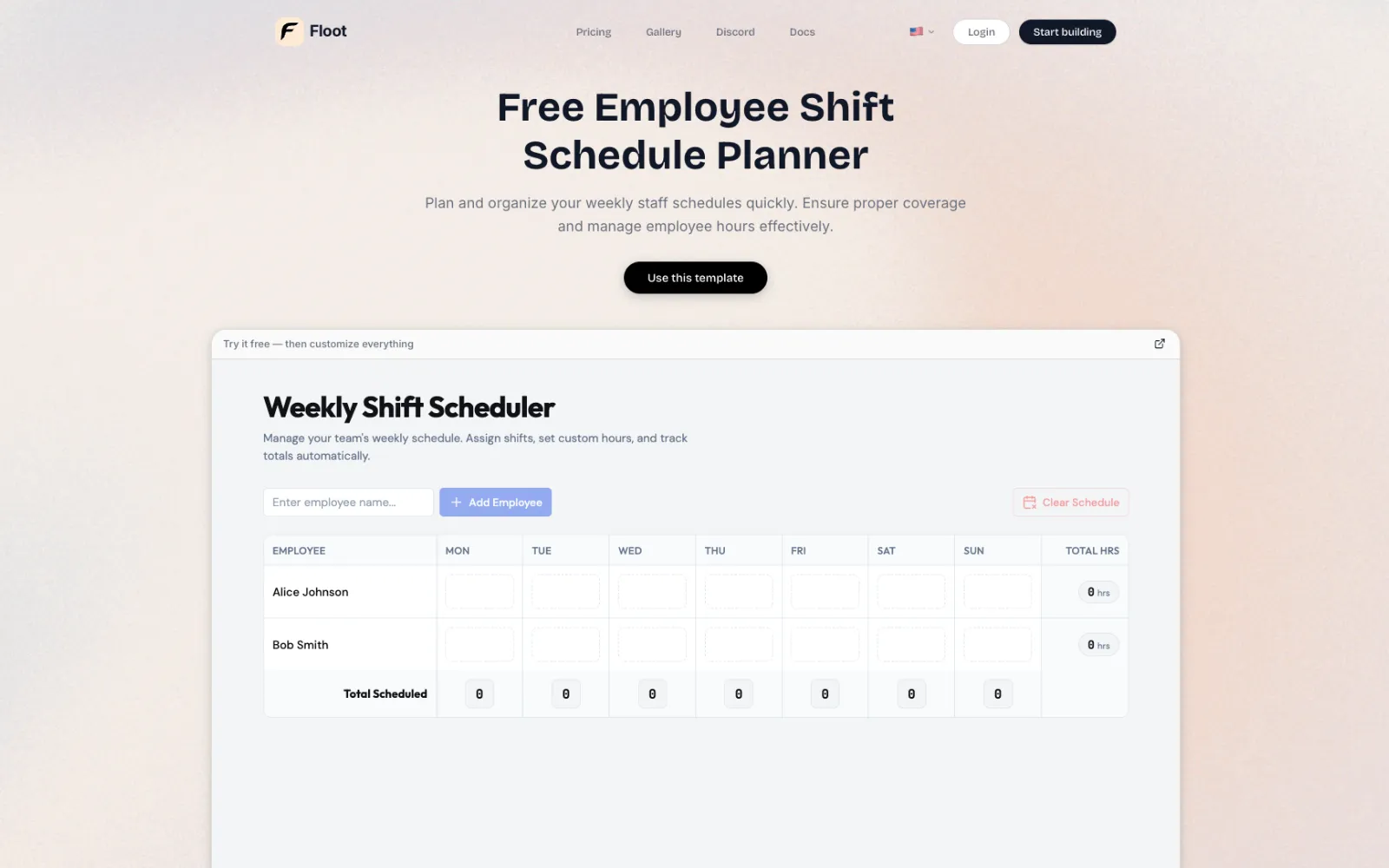
You can build a fair schedule with a template. Use the free employee shift schedule planner to start. It gives you a structure to work within.
The planner handles the mechanics. You focus on the fairness.
Step 2: Gather Your Information
Before you open the planner, collect what you need:
- How many people are on your team?
- How many shifts do you need to fill each day?
- What shifts exist (morning, afternoon, evening, closing)?
- Who requested time off?
- What were last month's shift assignments?
- Who is approaching overtime limits?
Write this down. You'll reference it as you build.
Step 3: Block Out Time-Off First
Don't schedule people who requested time off. Mark those days as unavailable in your planner.
This forces you to work with the people who are actually available. It prevents double-booking and last-minute scrambles.
Step 4: Rotate Undesirable Shifts
Look at your shifts. Which ones are least desirable? Usually closing shifts and early mornings.
Check last month's schedule. Who worked these shifts? Make a mental note.
Now build this month's schedule so different people get these shifts. If Sarah closed four times last month, she shouldn't close four times this month. Give those shifts to people who didn't close as much.
This rotation system is the core of fairness.
Step 5: Avoid Back-to-Back Closes or Opens
As you assign shifts, watch for patterns. If someone is closing on Friday, don't schedule them to open on Saturday.
Give them a later start or a day off. This rule is non-negotiable. It's the difference between a sustainable schedule and one that burns people out.
Step 6: Monitor Overtime
As you assign shifts, add up hours. Most full-time employees should stay around 40 hours per week. Part-time employees have their own targets.
If someone is approaching their limit, stop assigning them shifts. Move to someone else.
Overtime should be planned, not accidental.
Step 7: Copy Your Schedule and Add Employee Logins
Once your schedule is built in the planner, copy it. Create a version that employees can access.
Add employee logins so each person can see their own schedule. This transparency prevents confusion. Everyone knows when they work.
Updates are easy. Change the schedule once and all employees see the update.
Common Scheduling Mistakes to Avoid
Scheduling Without a System
Doing it in your head or on loose paper leads to unfair patterns. Use a tool. Use a template. Use something systematic.
Ignoring Overtime Until It's Too Late
Track hours as you build the schedule, not after. Once people are scheduled, it's hard to change.
Allowing the Same People to Always Get Bad Shifts
This destroys morale faster than anything else. Rotate shifts intentionally.
Scheduling Back-to-Back Closes or Opens
Your employees will resent you. They'll also perform worse. Avoid it.
Not Giving Employees Access to the Schedule
If they have to ask you what time they work, that's a problem. Share the schedule. Let them see it.
Tools and Templates Make This Easier
You don't need complex software. A good template or planner tool handles 90% of the work.
The free employee shift schedule planner gives you a starting point. It's pre-built with common shifts and a structure that prevents mistakes.
Use it to build your schedule. Then copy it and add employee logins so your team can access it.
This takes hours of manual work and reduces it to minutes.
Final Thoughts
Fair scheduling is not complicated. It's a system.
Rotate undesirable shifts. Avoid back-to-back closes or opens. Track overtime. Handle time-off requests early.
Do these four things and your schedule will be fair. Your team will respect it. Morale will improve.
Start with a template. Build it systematically. Share it with your team.
That's how you create a schedule that works.
Ready to build a fair schedule?
Use the free employee shift schedule planner and create your next schedule in minutes.